
Article

Hermes Agent: what it is, how to install it and what you maintain yourself

Hermes Agent is a free, open-source AI agent from Nous Research under the MIT license. You install it on your computer or server, connect a model and a messenger, and it carries out tasks, keeps memory of past conversations and creates skills from solved tasks on its own. Installation is one terminal command or the Hermes Desktop app for Windows and macOS, followed by the “hermes setup” command. The software is free, while the model, the server and the upkeep stay with the owner.

Updated October 29, 2026·7 min read
Neko types commands in a terminal in the evening, while a robot cat next to her studies an unfolded manual over an open box of parts, puzzled

What Hermes Agent is

Hermes Agent is made by Nous Research, the team behind the open Hermes language models. The project describes itself as an agent that grows with you: it learns your projects, creates skills on its own and remembers how it solved a task. The code is open under the MIT license, and the software is free.

Hermes is a harness: the connected model does the thinking, and Hermes gives it tools, memory and a link to you. How such agents work is covered in How AI agents work.

  • Any model

    Nous Portal, OpenAI, Anthropic, DeepSeek, OpenRouter or your own model via Ollama. A context window of 64,000 tokens or more is required.

  • Memory

    Keeps conversations, notes and skills, so you can return to the work in the next session.

  • Skills

    A skill is a SKILL.md instruction file. You install them from a catalog, and the agent creates new ones itself after solved tasks.

  • 20+ platforms

    One gateway connects Telegram, WhatsApp, Discord, Slack, Signal, email and others.

  • Scheduled tasks

    Reports, backups and summaries on a schedule set in plain words. They run without you, through the gateway.

What you need to install it

  • A computer or server. Hermes runs on Linux, macOS, Windows, including via WSL2, and on Android via Termux. For the agent to answer around the clock, it goes on a server that never switches off; why a laptop is a poor fit for this is covered in Local AI agent.
  • A terminal. Apart from the Hermes Desktop app, everything is done with commands: installation, model, gateway, checks.
  • A model: a subscription login or an API key from one of the providers. Options are below.
  • A Telegram bot or an account in another messenger to talk to the agent.
  • Time for upkeep: updates, access, backups.

How to install Hermes Agent: five steps

  1. Installation. On Linux, macOS and WSL2 run curl -fsSL https://hermes-agent.nousresearch.com/install.sh | bash; on Windows use the PowerShell command from the project page. There is also the Hermes Desktop app for Windows and macOS. After installing, restart the terminal.
  2. Model. hermes setup offers three modes: quick via Nous Portal, full with your own keys, and a “blank slate” with almost everything off. To pick a provider step by step, use hermes model.
  3. First conversation. hermes or hermes --tui opens a chat in the terminal. Check that the agent answers, uses tools and remembers the previous message. hermes -c continues the last session.
  4. Telegram. Create a bot with @BotFather and save the token, find out your numeric ID, run hermes gateway setup, choose Telegram and enter the token and your ID in the allow list. hermes gateway starts the gateway.
  5. Running without you. The gateway must run constantly, including after a server reboot. How to keep it in the background is described in the project docs; hermes gateway status shows its state.

Without an allow list the Telegram gateway lets no one in, and that is right. Keep the bot token secret: if it leaks, revoke it with /revoke at @BotFather. The full guide is in the Hermes Agent documentation.

Which models to connect to Hermes

Hermes works with a model whose context window is 64,000 tokens or more. There are three ways to connect one.

  • Subscription login: Nous Portal, OpenAI Codex, Anthropic, xAI Grok and others.
  • API key: OpenRouter, Fireworks, DeepSeek and other providers, billed per token.
  • Your own model: Ollama, vLLM, SGLang or any server with an OpenAI-compatible API. What a model on your own hardware costs you is covered in Local AI agent.

Claude comes with a caveat. According to the Hermes docs, signing in via Anthropic works only on the Max plan and requires purchased extra usage credits: Hermes usage is billed to them, and the plan's own allowance is not used. A Pro subscription cannot use this path; without Max the project recommends an API key billed per token. This is Hermes's own rule. As of October 28, 2026, the Anthropic help article says that third-party apps signed in with a Claude plan draw from the subscription limits; in spring, from April 4, third-party harnesses required extra payment or an API key. A Claude Pro or Max subscription covers Anthropic's own products, including Claude Code, within the plan's limits.

What you will maintain yourself

With an agent you host yourself, upkeep begins after installation. With Hermes it comes down to five jobs.

  • Updates. Install new versions and check that the agent, skills and gateway work after the update.
  • Access. The bot token, model keys in ~/.hermes/.env, the allow list. If a key leaks, you replace it yourself.
  • Server. Restarts after failures, disk space, network ports: nothing extra should face the internet.
  • Backups. Memory and skills build up for months, and you have to back them up yourself.
  • Model costs. With per-token billing the bill depends on the volume of tasks, and it needs watching.
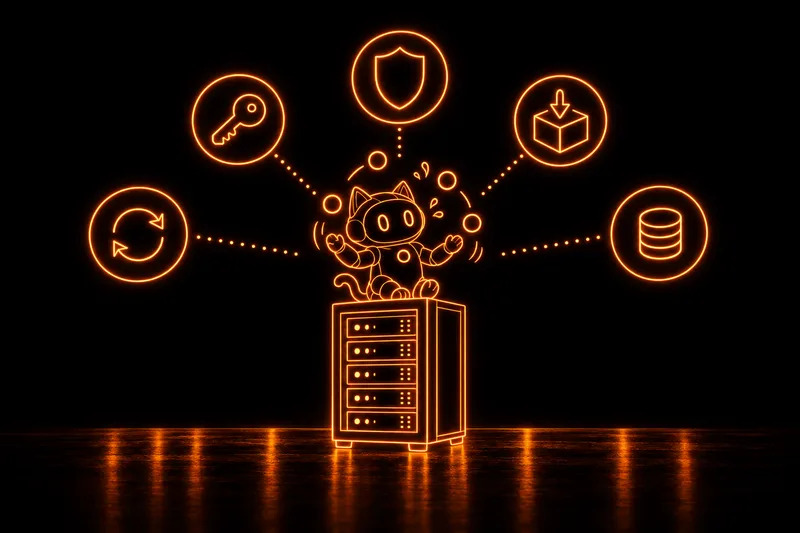
A robot cat sits on a server with five icons arranged in an arc around it: update arrows, a key, a shield, a backup box and a stack of coins
After installation the owner has five ongoing jobs: updates, access, security, backups and costs.

This is manageable if you already administer a server. If not, set aside time: the first weeks go into getting the agent to run reliably.

Who Hermes Agent suits

  • You are confident in the terminal and want to build an agent your way

    Hermes Agent on your own server
  • You want to try an agent on your computer in an evening

    Hermes Desktop on Windows or macOS
  • You need an everyday assistant and have no time to fix it

    A turnkey agent
Hermes Agent DIYNekoAgent turnkey
SoftwareFree, MIT licenseInstallation from 24,900 RUB once, for three installs
InstallationTerminal commands or Hermes DesktopButtons in a bot; the first one with a curator on a call, about two hours
ModelAny with a context of 64,000 tokens or moreClaude Code or Codex on your Claude or ChatGPT subscription
Claude subscriptionMax plus extra usage, or an API keyWorks
ServerYours, you set it upYour VPS, about 1,500 RUB a month
Updates and repairsYouRepairs: the Iris service; updates: you, with one button
BackupsYou set them upNightly encrypted backups

Hermes is a strong open-source project, and the difference between the paths is the same as with other open-source agents: who installs, fixes and updates it. Types of agents are compared in Which AI agent is best, and what can be free in an agent in Free AI agents. In NekoAgent we do the first install together on a call with a curator, and then during paid support Iris monitors the agent around the clock and helps bring it back after failures (reasonable efforts, no guaranteed response time), makes nightly encrypted backups and ships tested updates you install with one button.

An agent without the terminal

Plans from 24,900 RUB for three installs. The first one is on a call with a curator, with training.

Key questions

What is Hermes Agent?

A free, open-source AI agent from Nous Research. It installs on a computer or server, works with the model you choose, keeps memory and skills and talks to you via Telegram and other messengers.

Is Hermes Agent free?

The software is free, MIT license. You will pay for the model, a subscription or an API key, and for a server if the agent must run around the clock.

How do I install Hermes Agent?

On Linux, macOS and WSL2, with one curl command from the project page; on Windows, with a PowerShell command or the Hermes Desktop app. Then hermes setup connects the model and hermes gateway setup connects Telegram.

Does Hermes Agent work with a Claude subscription?

According to the Hermes docs, signing in via Anthropic works only on the Max plan and requires purchased extra usage credits; a Pro subscription cannot use this path. The other option is an API key billed per token. Anthropic's rules for third-party apps changed during 2026, so check the Hermes docs and the Anthropic help article before setting up.

Can I connect Hermes Agent to Telegram?

Yes. You need a bot from @BotFather, your numeric ID in the allow list and the hermes gateway setup command. The agent transcribes voice messages if speech recognition is enabled in the settings.


More articles

Neko assembles an AI agent from parts: a model, a server, Telegram and a knowledge base
Article · 8 min

How to create your own AI agent: DIY or turnkey

Your own AI agent needs four things: a model, a harness that gives the model memory and tools, a server where the agent runs around the clock, and a channel to talk to it, usually Telegram. You can put this together in a no-code builder, by hand from open source, or turnkey. Here is what each path costs in money and time.

Read the article
  • What an agent is made of
  • Three paths compared
  • Monthly cost
  • Turnkey, step by step
Neko weighs free software on a scale against a server, a model and time
Article · 6 min

Free AI agents: what is really free and what you pay for

The only free part of an AI agent is the software: OpenClaw and Hermes Agent are open source. The server that keeps the agent running around the clock and the model that does its thinking always cost money, and you pay for installation and upkeep with your time. The free tier of ChatGPT or Claude gives you a chat assistant, and you cannot build an agent out of it.

Read the article
  • What is free and what is not
  • Free ChatGPT vs an agent
  • OpenClaw and Hermes
  • Monthly costs
Neko examines a transparent robot cat through a magnifying glass; inside are the model, tools, memory and schedule
Article · 6 min

How AI agents work: explained in plain words

An AI agent is a language model that has been given tools, memory and a schedule. The model decides what to do, and a harness program carries out its decisions: reads files, sends messages, runs commands on a server. The agent works in a loop: it gets a task, makes a plan, takes a step, checks the result and decides what comes next.

Read the article
  • What an agent is made of
  • The work loop
  • How an agent remembers
  • Where agents go wrong
Neko at a desk between two robots: the assistant holds a speech bubble, the robot cat agent heads off to work with letters, an alarm clock and a key
Article · 6 min

AI agent vs AI assistant: the difference and which to choose

An AI assistant answers questions in a chat: you ask, it writes an answer, and you do the rest. An AI agent does the whole job: it works with email and files, remembers people and agreements, acts on a schedule and messages you first. The same model does the thinking for both; what differs is what is built around it.

Read the article
  • What the difference is
  • A comparison table
  • One task, two approaches
  • What to choose
Neko on a balcony records a voice message, and the robot cat agent writes her words into a glowing notebook
Article · 7 min

How to set up an AI agent: the first two weeks

Setting up an AI agent means telling it about yourself and your work, giving it simple first tasks and correcting it in words when it gets something wrong. All of this happens in an ordinary Telegram chat, without code. The agent writes what you say into memory, so every week it asks less and does better. Below is a plan for the first two weeks.

Read the article
  • What to tell it on day one
  • First tasks
  • How to correct the agent
  • Scheduled tasks
Neko in a bright workshop compares four robot agents on a table, a robot cat among them
Article · 7 min

Which AI agent is best: types of agents and how to choose yours

There is no single best AI agent for every case: agents come in four types, and each suits its own owner. They are cloud builders, the open-source agents OpenClaw and Hermes, your own agents on Claude Code or Codex, and ready-made turnkey agents. You choose by five questions: where the data lives, who fixes it, what it costs per month, whether it works in Telegram and which AI subscription it accepts.

Read the article
  • Four types of agents
  • Five questions to choose by
  • A comparison table
  • What to ask before buying
Neko in a bright office hands a stack of tasks to a robot cat sitting at its own desk with a laptop and a badge
Article · 7 min

AI employee: what it does, where a human is needed and what it costs

An AI employee is an AI agent given part of your regular work: correspondence, reminders, documents, summaries and reports. It works around the clock on a server, remembers people and agreements and runs tasks on a schedule. Money, promises to clients in your name and decisions with a high cost of error stay with a human. Per month an AI employee costs a server of about 1,500 RUB, an AI subscription and support.

Read the article
  • What the agent covers
  • Where a human is needed
  • Monthly cost
  • How to set tasks
In the evening Neko closes her laptop, while a robot cat with a phone sits on a running home server and keeps working
Article · 7 min

Local AI agent: on your own computer or on a server

A local AI agent is one that runs on your hardware rather than at a service. People mean two different things by it: a local model, when the neural network itself runs on your computer, and a local harness, when the agent program, files and memory live with you while a cloud model such as Claude or GPT does the thinking. An agent that works around the clock needs a computer that stays on, so it usually goes on your own server (VPS), about 1,500 RUB a month, rather than a laptop.

Read the article
  • Local model vs harness
  • An agent on a PC
  • Why you need a server
  • Where data is stored
In a small coffee shop Neko takes one sticky note with a task off a board and hands it to a robot cat holding a stopwatch
Article · 7 min

Implementing AI agents in a small business: a one-month plan and how to measure the gain

You can implement an AI agent in a small business within a month and without a separate project. Take one repeating routine, install the agent, spend two weeks fine-tuning it in ordinary chat and count how many hours a week it takes off your plate. No spec or integrations are needed at the start: an agent in Telegram only needs your explanations and access to the right files. Each month it costs a server of about 1,500 RUB and an AI subscription.

Read the article
  • The first routine
  • Two weeks of fine-tuning
  • How to measure the gain
  • Implementation mistakes
Neko works in AdsPower in the evening: the monitor shows a list of browser profiles, and the robot cat next to her points a paw at one of the rows
Article · 8 min

AdsPower: what this browser is and how to set up a profile and proxy

AdsPower is an antidetect browser: every profile has its own cookies, browser fingerprint and proxy, and websites see the profiles as different devices. That lets you run client accounts, team access and test accounts on one computer without mixing them up. AdsPower runs on Windows, macOS and Linux, two profiles are free forever, and you bring your own proxies: HTTP, HTTPS, SOCKS5 or SSH.

Read the article
  • What AdsPower is
  • A profile in five steps
  • Which proxies to pick
  • Common mistakes
Neko plugs a cable into a small home server in the evening, wires run from it to colourful chat bubbles, a robot cat sits on the server holding a padlock, and a red toy lobster stands nearby
Article · 8 min

OpenClaw: what it is, how to install it and connect Telegram

OpenClaw is a free, open-source AI assistant under the MIT license. It runs on your computer or server and answers in the messengers you already use: Telegram, WhatsApp, Discord, Slack, Signal and others. Installation is one terminal command, then a setup wizard connects the model, which takes about five minutes according to the docs. The software is free, while the model, the server, updates and security stay with the owner.

Read the article
  • What OpenClaw can do
  • Installation step by step
  • Telegram and a Claude subscription
  • What you maintain yourself
Neko on a sofa in the evening with her phone compares two helpers on the table: a plain grey bot waits with a single message bubble, while a robot cat juggles a calendar, an email, a document and a reminder
Article · 7 min

AI bot for Telegram or an AI agent: the difference and which to choose

An AI bot for Telegram is a bot that passes your message to a neural network and sends its answer back to the chat. An AI agent in Telegram looks the same but works differently: it lives on a server, remembers people and tasks, works with your files and email and messages you on a schedule. To ask, translate or draft a text, a bot is enough. To run your affairs every day, you need an agent.

Read the article
  • What an AI bot in Telegram is
  • How an agent differs from a bot
  • Comparison and prices
  • When a bot is enough
Neko at a workbench in the evening compares two glowing cores, orange and teal, while a robot cat with an open chest hatch waits next to her for one of them
Article · 7 min

Claude Code or Codex: which engine to choose for a personal AI agent

Claude Code by Anthropic and Codex by OpenAI are two harnesses that turn a model into an agent: they give it files, commands and tools on a server. For a personal agent the main choice between them is the subscription: Claude Code runs on a Claude Pro or Max plan, Codex on a ChatGPT plan, in a server terminal from Plus and up. The agent's memory, Telegram and schedule do not depend on the engine, and in NekoAgent you can switch the engine later right from the chat.

Read the article
  • What Claude Code and Codex are
  • Which subscription you need
  • How they differ day to day
  • Can you switch engines
Neko in a bright loft writes an instruction card and hands a finished glowing card to a robot cat holding an open card file with colored tabs
Article · 7 min

Claude Code skills: how to teach an AI agent a new task

A Claude Code skill is a folder with a SKILL.md file: a short description of when it is needed and step-by-step instructions. The agent sees the descriptions of all its skills and opens the right one by itself when a task matches the description, reading the full text only at that moment. This way you teach the agent a recurring task once, such as replying to a review or a weekly report, and never explain it again. Codex by OpenAI understands the same format.

Read the article
  • What a skill is
  • How the agent picks a skill
  • Business examples
  • Skills and plugins
Neko relaxes in an armchair with a tablet while a robot cat sorts letters into trays on its own and shows her a card with a question mark and a green check; a low glass barrier glows next to the desk
Article · 7 min

Autonomous AI agents: what an agent does on its own and when it asks a human

An autonomous AI agent performs tasks without a command for every step: on a schedule and by the rules you gave it. It sends summaries and reminders, prepares drafts, records decisions in its memory and messages you first. Money, messages to people on your behalf and deleting data are best kept subject to your confirmation, even for an autonomous agent. Limits are set in two ways: with rules in your chat with the agent and with the access you give it.

Read the article
  • What the agent does alone
  • When it asks a human
  • How to set limits
  • Several agents
Neko in her kitchen in the evening looks at a chat message on her phone; a robot cat on the counter holds a glowing card with a bell and a checklist; on the fridge are a calendar with circled dates, a child's drawing and a shopping list, next to a grocery bag and a folder of documents
Article · 7 min

Personal AI assistant: errands, family and reminders in one chat

A personal AI assistant is an agent that runs your errands in Telegram: it remembers agreements, dates and documents, reminds you about them on its own and takes tasks by text or voice. It differs from an AI chat on your phone in two ways: it has a lasting memory about you and it messages you first when a deadline approaches.

Read the article
  • What to give the assistant
  • How it differs from a chat
  • An assistant for the family
  • Personal data